Communal Clashes Claim Lives In Ezeagu, Schools, Churches Destroyed, Residents Flee

By Desmond Ukwuru
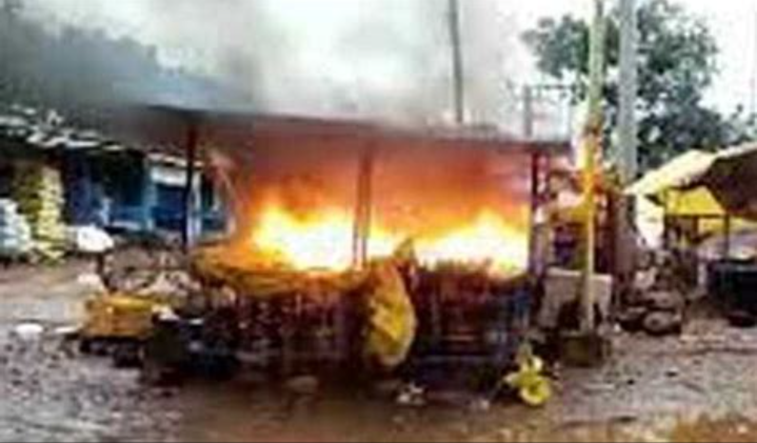
It does appear that the communal clashes that engulfed the people of Olo and other communities in Ezeagu Local Government of Enugu State, Southeast Nigeria has obstructed every viable solutions. This is as no fewer than four persons have lost their lives while property worth millions of naira were destroyed when Olo, Oyofo and Awha communities clashed over a land dispute in the area recently
Among the property destroyed were school, churches, a tricycle and many motorcycles.
Confirming the incident, spokesperson for the Enugu State Police Command, Daniel Ndukwe, said 12 suspects were arrested in connection with the murder of the four casualties during the dispute.
The incessant communal crisis in Ezeagu is historic. In 2024, the communal dispute in Olo Ancient Community took a turn for the worse, resulting in the death of 11 persons. Our correspondent reports that the latest attack occurred on the 1st day of March this year
The community has been at war among the various clans over the control of some lands with mineral resources. Efforts by successive governments in Enugu State to resolve the crisis have not yielded the desired results.
Former Governor of the state, Ifeanyi Ugwaunyi had upon assumption of office invited all the stakeholders in the community, during which they signed a Memorandum of Understanding to maintain peace.
However, a few months after signing the symbolic MoU, the crisis escalated, leading to the killing of at least 11 persons and burning down of houses, schools and churches
The victims included Pius Onoh, Clement, Madu, Ginika Echendu, Mathias Onu, Obiomo Ozor, a widow, Maduche Ifeyinwa Gladys, among others.
Late Maduche was said to have met her untimely demise when she rushed out to know the source of the noise in her compound. The President General of Oghe community, Chief Hyanith Ozor told our correspondent that, “they murdered the peaceful woman in cold blood for doing nothing.
“They went from house to house killing people and setting houses ablaze.
“Some of our villagers are yet to be seen after the attack- they include- Maduche Chidiebere, Louis Ozoemena, Andrew Onyekachi, Blessing Akubueze, Ngozi, Omenka, among others.
“At the last count, I can confirm to you that 11 persons were massacred; we received their dead bodies; our community has been deserted; it’s now a ghost village, we don’t know what will happen next.”
Innocent Victims
In the past decades years, increased communal clashes in some communities across Ezeagu, have resulted in dozens of avoidable deaths, injuries and destruction of properties. Targeted during these wanton and avoidable but persistent clashes are school buildings and churches.
One of the most devastating dimensions of insecurity in Ezeagu has been the deliberate targeting of churches and schools — the very institutions that shape the moral and intellectual future of the community.
Reports of attacks that resulted in the burning of church buildings and school facilities reveal not just random violence, but symbolic aggression against Western education and organized religious life. These institutions represent literacy, exposure, social mobility, and modernization. Their destruction sends a chilling message to families who see education and faith as pathways to stability.
Particularly disturbing are accounts that suggest some attacks were not merely opportunistic acts by external bandits, but allegedly coordinated by local extremist elements and factions seeking to intimidate youths who embraced Western education. Young people who pursued schooling, sports, or external opportunities reportedly became targets of hostility — seen as “different” or as threats to entrenched local power structures.
If such patterns are accurate, the implication is profound: Schools are no longer safe learning spaces. Churches are no longer guaranteed sanctuaries. Educated youths become vulnerable rather than celebrated.
The burning of schools does more than destroy buildings — it disrupts generations. It creates trauma, produces dropouts, and forces families to relocate. When classrooms are reduced to ashes, sports programmes tied to those schools also collapse. Inter-school competitions disappear. Physical education stops. Talents that might have emerged through structured school systems are lost.
Likewise, attacks on churches fracture social cohesion. In many rural Nigerian communities, church spaces double as venues for youth meetings, community sports planning, and scholarship support initiatives. Destroying them weakens both spiritual life and social organization.
The result is a dangerous cycle: Violence disrupts education. Disrupted education limits opportunity and retards future innovations and development. Limited opportunity fuels further instability.
Insecurity in Ezeagu, therefore, is not just a security issue — it is an assault on enlightenment, youth empowerment, and structured development.
The endless bloodletting in communities such as Umudim Olo, Oha Ndi Agu Olo, Obeleagu Olo, a community once held together by their shared umbilical cord, are now torn apart by ceaseless communal clashes which have been hijacked by foreign elements to make life unbearable for the people